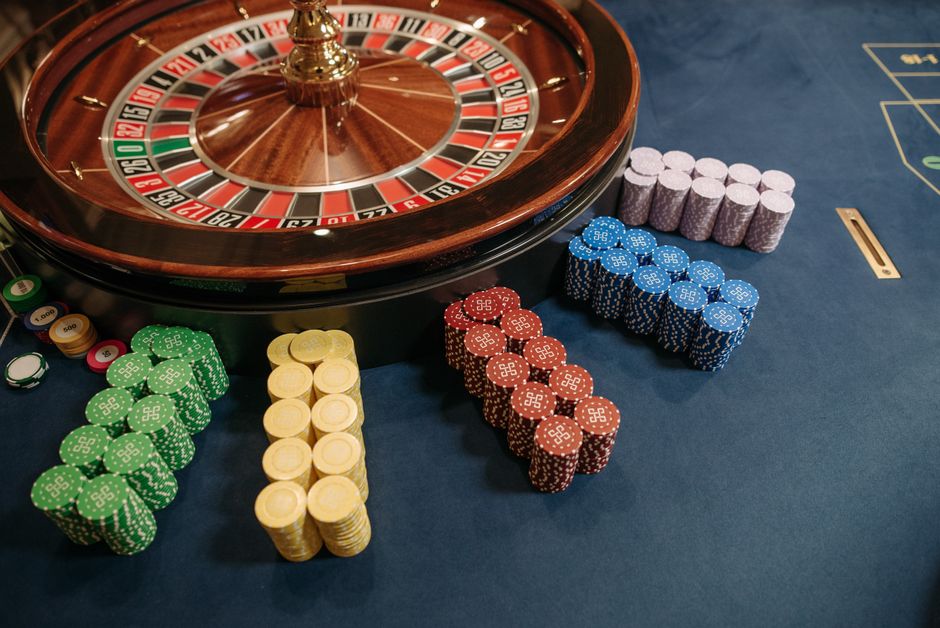
Every spin of a slot machine feels like a coin flip with a sugar rush. You pull the lever, the reels blur, and for a half-second you're convinced the next one could change everything. But beneath that flashing, jingling surface sits a cold, elegant equation — one the casino understands perfectly and most players never bother to solve. If you're going to put real money on the line, you owe it to yourself to crack that equation open. Not to kill the fun, but to stop being the sucker at the table.
Let's pull back the curtain on how these games actually work, then look at poker and sports betting through the same lens. Because the players who last aren't the luckiest — they're the ones who understand what the house is really selling.
RTP Is Not a Promise — It's a Long-Run Average
Ask ten slot players what a 96% RTP means and you'll get ten variations of "I get back 96 bucks for every 100 I put in." That's not it. Return to Player is a theoretical number calculated over millions of spins, and it says nothing about your session. You could feed a 96% machine 500 credits and walk away with zero. You could also hit a jackpot on your fifth spin.
Think of it like this: a coin has a 50% chance of landing heads over infinite flips, but five flips in a row can all be tails. RTP works the same way. The machine isn't tracking your losses and preparing to pay you back. Each spin is independent, generated by a random number generator (RNG) that's audited by labs like eCOGRA or GLI. A detailed guide is available at สล็อตเว็บตรง.
What RTP does tell you is the size of the casino's edge. A 96% RTP slot has a 4% house edge. A 92% slot has an 8% edge. Over thousands of spins, that gap compounds ruthlessly against you — which is why serious players check the RTP before they ever press play. It's usually buried in the game's info screen or listed on the provider's site.
- Above 97%: Rare but worth hunting. Some NetEnt and Mega Jove titles fall here.
- 95–96%: The solid middle ground. Most reputable modern slots sit here.
- Below 94%: Be skeptical. A few points of RTP sounds small until you're 3,000 spins deep.
Volatility Is the Dial That Changes Everything
Here's the part most players miss entirely: two slots can share an identical 96% RTP and feel completely different. That's volatility — and it determines whether your bankroll breaths or suffocates.
Low-volatility slots pay small, frequent wins. You'll stay in the game longer, but you're unlikely to triple your deposit. High-volatility slots are the opposite: long, painful dry spells punctuated by rare, explosive payouts. Pragmatic Play's Gates of Olympus and similar titles are notorious for this — you can spin 200 times with nothing meaningful, then hit a 500x multiplier that erases it all.
Neither is better. The right choice depends on what you're there for. If you want a slow, sociable session with a modest budget, low volatility is your friend. If you're chasing a screenshot-worthy win and can stomach the swings, high volatility is the game. What kills bankrolls is mismatching the two: playing a brutal, high-variance slot with a budget built for penny spins.
Poker Is the One Game You Can Actually Beat
Here's a truth the casino industry rarely advertises loudly: poker is the only mainstream gambling game where skill genuinely overrides the house edge. In slots and roulette, the math is fixed. In poker, you're not playing the house — you're playing other people.
The casino takes a rake (a small cut of each pot) and steps aside. Your profit comes from opponents' mistakes, not from beating the dealer. That means a skilled player can sustain a positive win rate over tens of thousands of hands. It also means a careless player bleeds out faster than any slot could manage.
Three concepts separate winning players from long-term losers:
- Position. Acting last gives you information before you commit chips. It's the single most underrated edge in no-limit hold'em.
- Bankroll management. A winning player with 20 buy-ins still goes broke if their edges are thin and their variance brutal. Discipline beats talent over a sample size.
- Game selection. Sitting in a game full of professionals is a losing move regardless of your skill. Find softer tables.
The flip side is variance. Even a player with a genuine edge will have losing months that feel like proof they're terrible. This is why tracking software and hand histories matter — your gut lies, the data doesn't.
Sports Betting and the Illusion of the Sure Thing
Sports betting has exploded thanks to mobile apps, and with it comes a flood of confident "locks" and "guaranteed" picks that are anything but. The bookmaker's margin lives in the odds, and it's baked in on both sides of every market.
Consider a simple two-way market where the true probability is 50/50. A fair price would be +100 on both sides. The book offers something like -110 on each, meaning you must risk $110 to win $100. That gap — the vig or juice — is how the sportsbook profits no matter which team wins. Over a season, betting into -110 lines requires a 52.4% win rate just to break even. That's a massive demand on anyone who thinks they're a genius because they went 7-3 last weekend.
Line shopping is the easiest fix. Odds vary between books — sometimes by several percent on the same market. The bettor who always finds the best available price builds an edge before a single game kicks off.
Where the House Actually Makes Its Money
The casino's edge doesn't come from dramatic heists. It comes from volume and repetition. A 1% advantage over thousands of bets is a machine that compounds quietly. That's why the games are designed to keep you playing: free drinks, loyalty points, flashy animations, near-miss graphics designed to spike dopamine. None of it is accidental.
The responsible player flips the psychology around. Set loss limits before you start. Treat wins as capital, not as fuel for more spins. Take breaks. Most regulated platforms now let you set deposit limits, session timers, and self-exclusion tools — use them without shame. They're not signs of weakness; they're the same math the house uses, pointed in your direction.
Play the Long Game, Not the Loud One
None of this is meant to talk you out of gambling. Slot spins, poker hands, and well-researched wagers can be genuine fun, and occasionally profitable. But the players who survive — who don't drift from entertainment into disaster — are the ones who understand that every game is, at its core, a test of probabilities.
Learn the RTP. Respect the volatility. Play poker like it's a discipline, not a lottery. Shop your odds. And remember that the casino's entire business model rests on players who never ask the question you just answered: what's the actual math behind this? Once you know the equation, you play on your terms — not theirs.


Félix Lengyel 01.01.2024 at 8:00
You guys have put so much work, effort, and time while designing this awesome theme I can see that passion when I incorporated it into my website.
ReplyJoseph Crawford 01.01.2024 at 8:00
The only thing I LOVE more than this theme and it’s incredible options is the support team! They are freaking amazable!
ReplyPatsy Hamlin 01.01.2024 at 8:00
Outstanding quality in this theme, brilliant Effects and perfect crafted Code. We absolutely love it and can highly recommend DynamicLayers!
Reply